
Turn those “What’s 7700 bet login mean, Mom?” questions into powerful teaching moments about probability and smart decision-making. Every time your child spots sports betting ads during Hockey Night in Canada or sees odds flash across their favourite team’s app, they’re encountering mathematical concepts that shape critical thinking—and you can harness that curiosity without opening the door to gambling culture.
Probability isn’t just abstract math classroom material. It’s the foundation of weather forecasts your kids check before trail adventures, the likelihood of spotting a loon on your canoe trip, and understanding why practice actually improves their soccer skills. When children grasp how probability works through hands-on outdoor exploration—tracking animal footprints, predicting weather patterns, or calculating their chances of reaching the campsite before sunset—they develop the analytical skills to see through manipulative betting advertisements and make informed choices throughout their lives.
This article transforms confusing sports betting terminology into age-appropriate lessons disguised as outdoor adventures. You’ll discover nature-based activities that teach odds and probability concepts while building your child’s mathematical confidence and critical thinking abilities. From counting bird species at your local conservation area to predicting hiking outcomes on Bruce Trail adventures, these approaches keep screens off, minds engaged, and families connected to the incredible Canadian outdoors—all while equipping your children with the knowledge to navigate our betting-saturated sports culture with wisdom and healthy skepticism.
Why Sports Probability Matters for Kids (Beyond the Screen)
Building Real-World Math Skills
When kids calculate whether they’ll spot a deer on today’s hike based on yesterday’s sightings, they’re building powerful mathematical reasoning skills that extend far beyond the trail. Probability teaches children to recognize patterns in nature—like predicting rain by observing cloud formations or estimating how many pinecones they’ll find under different tree types. These prediction games sharpen logical thinking as kids learn to make educated guesses rather than wild wishes.
During outdoor adventures, estimation becomes second nature. Will we reach the lookout point before lunch? How many rocks will we need to cross this creek? These real-world calculations build number sense and confidence in ways that translate directly to classroom success. The beauty is that kids don’t even realize they’re practicing math—they’re simply engaged in the joyful challenge of understanding and predicting their natural world, developing critical thinking skills that serve them throughout life.
Learning to Assess Risk and Reward
Understanding probability helps young adventurers make smarter choices in the great outdoors. When your kids spot dark clouds rolling in over a Canadian Shield lake, they’re naturally calculating risk and reward—should we paddle back now or explore one more island? This is practical probability in action. Before setting out on a trail at Algonquin or exploring a local conservation area, encourage your children to assess conditions together. What’s the chance of rain based on those clouds? If we take the longer trail, will we make it back before dark? These real-world calculations build critical thinking skills far more valuable than understanding betting odds. Start simple: let your kids help choose between two hiking routes by considering distance, difficulty, and weather forecasts. They’ll learn that some risks are worth taking with proper preparation—extra snacks, rain gear, and a map—while others aren’t. This probability thinking becomes second nature, teaching them to weigh options thoughtfully whether they’re planning a camping trip or making everyday decisions.
What Are Sports Odds? A Kid-Friendly Explanation
Probability as Prediction, Not Gambling
Here’s a wonderful way to think about probability: it’s like being a nature detective, not a gambler! When your family heads out on a trail, you might predict, “I bet we’ll see a red squirrel today because we spotted three yesterday near those pine trees.” That’s probability in action – you’re making an educated guess based on real information you’ve gathered.
The same thinking applies to sports. When someone says a hockey team has good odds of winning, they’re looking at facts: how many games the team has won, which players are healthy, and how they’ve performed against their opponent before. It’s detective work with numbers, just like tracking which bird species visit your backyard feeder most often.
Understanding probability helps kids become better thinkers in everyday life. Will it rain during our camping trip? What are the chances we’ll spot beaver activity at that pond we explored? These predictions become more accurate when we pay attention to patterns and gather information – whether it’s reading clouds in a Saskatchewan sky or remembering animal habits from past hikes. Teaching probability through nature experiences builds critical thinking skills that last a lifetime, far beyond any scoreboard.
How to Read and Understand Basic Odds
Understanding odds is like predicting what might happen on your next outdoor adventure! Think about checking the weather before a hike – if there’s a 3 out of 10 chance of rain, that’s the same as saying 30 percent or 3:10 odds. These are just different ways of expressing the same thing.
Fractions show us parts of a whole. Imagine you and nine friends are playing capture the flag in the park. If you’re choosing teams randomly, you have a 1/2 chance (one out of two) of being on either team. That’s the same as 50 percent or a 1:1 ratio!
Here’s a fun Canadian example: If you’re birdwatching and spot 20 birds, with 5 being blue jays, that’s 5/20 or 1/4 – meaning one quarter of the birds you saw were blue jays. You could also say there’s a 25 percent chance the next bird might be a blue jay, or express it as 1:3 odds.
These simple math skills help us make predictions about nature patterns, weather, wildlife sightings, and so many everyday situations. Understanding probability isn’t about gambling – it’s about developing critical thinking skills that help you make smart decisions throughout life’s adventures!
Fun Outdoor Activities That Teach Probability
Nature Prediction Games
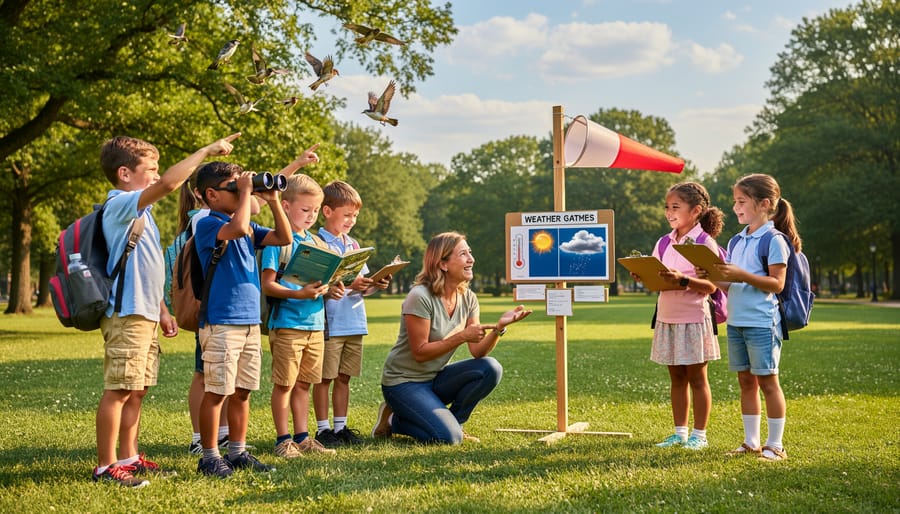
Step into Canada’s incredible wilderness and transform your child into a nature detective! Instead of predicting game scores, they’ll sharpen their observation skills by forecasting what might happen on your next outdoor adventure. Start simple: before heading out to your local park or conservation area, ask your kids which birds they think they’ll spot. Will they see more robins than chickadees? Based on the weather and season, what are the chances of seeing a hawk?
Weather prediction becomes a thrilling game too. Challenge your children to observe morning clouds and guess if rain will arrive before lunch. Track their predictions over several weeks, calculating how often they were right. This teaches probability through real-world patterns while building their connection to Canadian skies and seasons.
Animal trail prediction offers fantastic learning opportunities on hiking adventures. Notice tracks near a creek? Ask your little explorers which animals might use this path at dawn versus dusk. Will deer or raccoons visit? Encourage them to estimate probabilities based on scat, prints, and habitat clues. Return at different times to test their predictions, turning each outing into an exciting scientific experiment. These activities build critical thinking skills that help children understand probability naturally, equipping them to analyze patterns and make informed predictions throughout life.
Camp Games with Math Behind the Fun
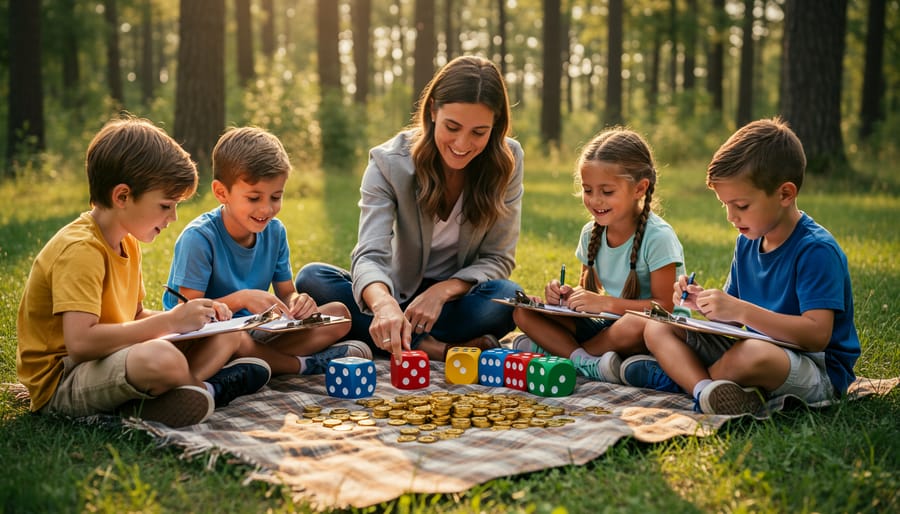
Turn your next camping trip into a probability playground with simple camp games that naturally teach mathematical thinking! Start with a classic dice challenge where kids predict outcomes before each roll. Have them track results on a chart using found natural materials like pebbles or pinecones—they’ll quickly discover that rolling a seven happens more often than rolling a two, introducing the concept of probability distributions without worksheets.
Coin toss tournaments around the campfire create excitement while demonstrating 50-50 odds. Kids can predict heads or tails sequences, learning that previous flips don’t influence future results—a crucial concept in understanding chance versus skill.
Try team relay races where children draw coloured stones from a bag to determine their next challenge. By varying the number of each colour, you control the odds and spark discussions about fair versus unfair games. As they strategize which bag offers better chances of drawing their team colour, they’re building critical thinking skills that help them evaluate real-world situations, from weather forecasts to understanding why some outcomes are more likely than others in daily life.
Sports Scoreboard Analysis
Watching hockey night in Canada becomes a wonderful teaching moment when you focus on patterns and predictions rather than betting outcomes. Grab some popcorn, settle in with your kids, and transform that game into an exciting probability lesson. Ask questions like “Which team do you think will score next based on how they’re playing?” or “What patterns do you notice in their shots on goal?” Keep a simple tally sheet together tracking shots, saves, and goals—kids love seeing the numbers add up and spotting trends as the game unfolds.
This same approach works beautifully with junior league games at your local arena, where the atmosphere feels more relaxed and personal. Between periods, chat about what factors might influence the next period’s outcome—player energy, ice conditions, or team strategies you’ve observed. You’re building critical thinking skills while enjoying quality time together, teaching your children to analyze information and make thoughtful predictions based on evidence rather than chance. These conversations plant seeds for understanding probability in everyday life, far removed from any gambling context.
Keeping the Conversation Age-Appropriate and Gambling-Free
For Younger Kids (Ages 6-9)
For younger adventurers, probability is all about making playful predictions during outdoor explorations! Turn your nature walks into prediction adventures by asking questions like “How many robins do you think we’ll spot today?” or “Will we see more maple leaves or oak leaves on our trail?” Keep track of guesses and discoveries using simple tally marks on a clipboard, teaching basic fractions naturally—if you found 6 pinecones and 3 were open, that’s 3 out of 6, or half!
Create a weather prediction chart where kids forecast tomorrow’s conditions based on cloud patterns and animal behaviour, a skill many Canadian Indigenous peoples have mastered for generations. They’ll love discovering how often their predictions come true! Try coin-flip games using smooth stones from the creek—will it land moss-side up or down? These simple activities introduce the foundation of probability without screens or complicated math, just curious minds exploring patterns in the amazing world around them. The goal isn’t perfect accuracy but building observation skills and understanding that some outcomes are more likely than others, valuable thinking tools for life’s bigger decisions ahead.
For Older Kids (Ages 10-14)
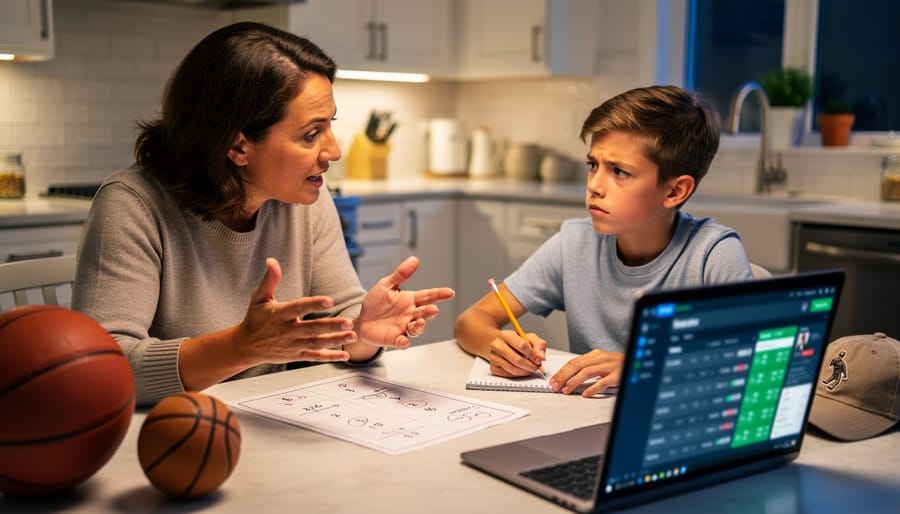
As your child enters their pre-teen and teen years, they’re encountering sports betting advertisements everywhere—during hockey games, on billboards, and across social media. This is the perfect time to have honest conversations about what those ads really mean and why probability matters in real-world decision-making.
Start by exploring more complex probability scenarios outdoors. Calculate the odds of spotting specific wildlife on a nature walk based on seasonal patterns, or determine the probability of different weather conditions affecting your weekend camping trip using historical data. These activities build critical thinking skills while demonstrating how probability applies beyond gambling.
When those betting ads appear, use them as teaching moments. Discuss why companies spend millions promoting sports betting and how they profit when most people lose money over time. Explain that odds are deliberately set to favour the house, not the bettor. Help your teen understand that exciting advertisements are designed to make betting seem fun and risk-free—but the math tells a different story.
Encourage your child to question media messages and recognize persuasive techniques. Understanding probability empowers them to make informed decisions throughout life, from evaluating risks during outdoor adventures to navigating financial choices as adults. These conversations build resilience and analytical skills that extend far beyond sports statistics.
Addressing the Sports Betting Culture in Canada
If you’ve been watching hockey games or scrolling through social media lately, you’ve probably noticed the surge in sports betting advertisements. It’s everywhere in Canada right now, and as parents, it’s natural to feel concerned about this shift in our sports culture. Here’s the encouraging news: teaching your kids about probability through outdoor activities actually builds the critical thinking skills they need to navigate this betting-saturated landscape.
The difference between understanding mathematical probability and gambling comes down to purpose and risk. When your child calculates the chances of spotting a chickadee on your morning hike or estimates how likely rain is based on cloud patterns, they’re using probability as a thinking tool. Gambling, on the other hand, uses these same concepts to risk money with the odds stacked against the player. This distinction is worth discussing openly with older kids who are noticing the betting ads.
Help your children develop healthy skepticism by talking about what those ads don’t mention. When you’re sitting around the campfire, ask questions like: “Why do you think companies spend so much money advertising betting? How do they make their profits?” These conversations plant seeds of critical thinking that grow stronger as kids mature.
The outdoor activities you’re already doing together provide the perfect foundation. When kids understand probability through nature observations and backyard experiments, they see math as a tool for understanding the world, not a way to chase quick money. They learn that real excitement comes from predicting weather patterns for camping trips, calculating trail distances, or estimating wildlife sightings—adventures where the reward is experience and connection, not cash. You’re already giving them something far more valuable than any betting app ever could.
Teaching probability through outdoor activities transforms abstract math concepts into exciting real-world adventures that stick with kids long after they’ve come inside. When you’re at the campsite predicting weather patterns, on the trail estimating wildlife sightings, or tossing stones at targets during a family hike, you’re building critical thinking skills that help children navigate a world filled with odds, predictions, and probabilities. These nature-based teaching moments offer something screen-based learning simply can’t match—the sensory experience of testing predictions against actual outcomes in the great Canadian outdoors. By grounding these lessons in sports appreciation and outdoor exploration, you’re equipping your children with valuable mathematical reasoning while fostering a healthy skepticism about gambling culture they’ll inevitably encounter. The next time you spot sports betting ads during a hockey game, you’ll have the confidence to turn it into a meaningful conversation about probability, risk, and smart decision-making—all built on those wonderful moments you’ve shared together outside.